Gamers often wonder about how much DDR5 RAM is truly necessary for their setups. This comprehensive guide aims to resolve common queries and provide clear answers. We'll explore the sweet spot for memory capacity, discussing factors like game types, system requirements, and future-proofing your gaming rig. Understanding DDR5's benefits, its speed, and latency implications is crucial for making informed decisions. Many users ask if 16GB is enough or if 32GB is the new standard. We will delve into these questions, offering practical advice and insights to help you optimize your gaming experience without overspending. Stay ahead with the latest information on DDR5 performance and value, ensuring your system runs smoothly. This article helps resolve common confusion.
Latest Most Questions Asked Forum discuss Info about how much ddr5 for gaming
Welcome to the ultimate living FAQ about how much DDR5 RAM is truly needed for gaming, freshly updated for the latest hardware releases and game patches! It's super important to stay informed as technology evolves, and getting the right amount of RAM is critical for smooth, high-performance gaming. This section aims to resolve all your burning questions, drawing from current community discussions and expert insights. We'll dive deep into capacity, speed, and other crucial factors so you can make an informed decision for your gaming rig. Whether you're building new or upgrading, this guide has got you covered, making sense of all the jargon and giving you practical advice. Let's get started!
DDR5 RAM Essentials for Gamers
How much DDR5 RAM is ideal for gaming right now?
For most gamers today, 32GB of DDR5 RAM is considered the ideal capacity. While 16GB can handle many games, 32GB provides significantly more headroom, ensuring smoother performance in memory-intensive titles, during multitasking, and for future game releases. It prevents stuttering and allows for background applications without impacting your gaming experience. This capacity truly offers a more robust and future-proof setup.
Is 16GB DDR5 enough for gaming in 2024?
Yes, 16GB of DDR5 RAM is still generally enough for many current games, especially at 1080p and 1440p resolutions. However, it's becoming the minimum requirement rather than the recommended amount for new builds. You might encounter performance limitations or need to close background applications in very demanding AAA titles or when aiming for higher frame rates. For a budget-conscious build, it can work, but for a premium experience, consider more.
Does DDR5 RAM speed matter for gaming performance?
Absolutely, DDR5 RAM speed significantly impacts gaming performance, especially when paired with powerful CPUs. Faster speeds (e.g., 6000MHz to 6400MHz) lead to increased bandwidth, allowing your processor to access game data more quickly. This can result in higher minimum frame rates and overall smoother gameplay, reducing stutters, particularly in CPU-bound scenarios. Optimal speed should always be balanced with good latency for the best results.
What is considered good latency for DDR5 gaming RAM?
For DDR5 gaming RAM, a CAS Latency (CL) of 30 to 32 at speeds around 6000MHz to 6400MHz is generally considered excellent. While DDR5 has higher raw latency numbers than DDR4, its significantly higher speeds often result in better effective latency. Lower CL numbers mean quicker response times from your RAM, which can translate to a snappier system and better in-game responsiveness. Always aim for the lowest CL possible for your chosen speed.
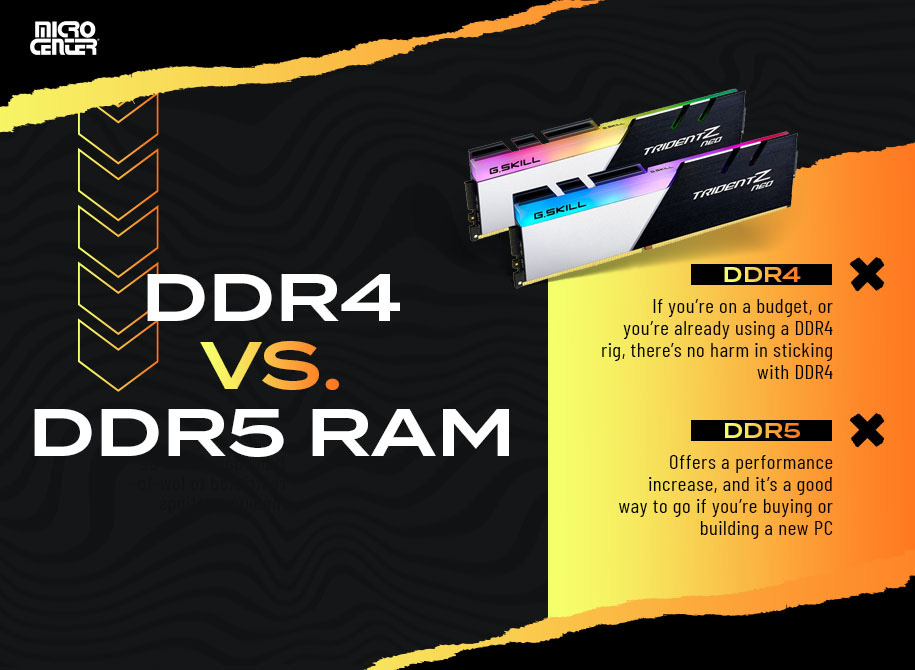
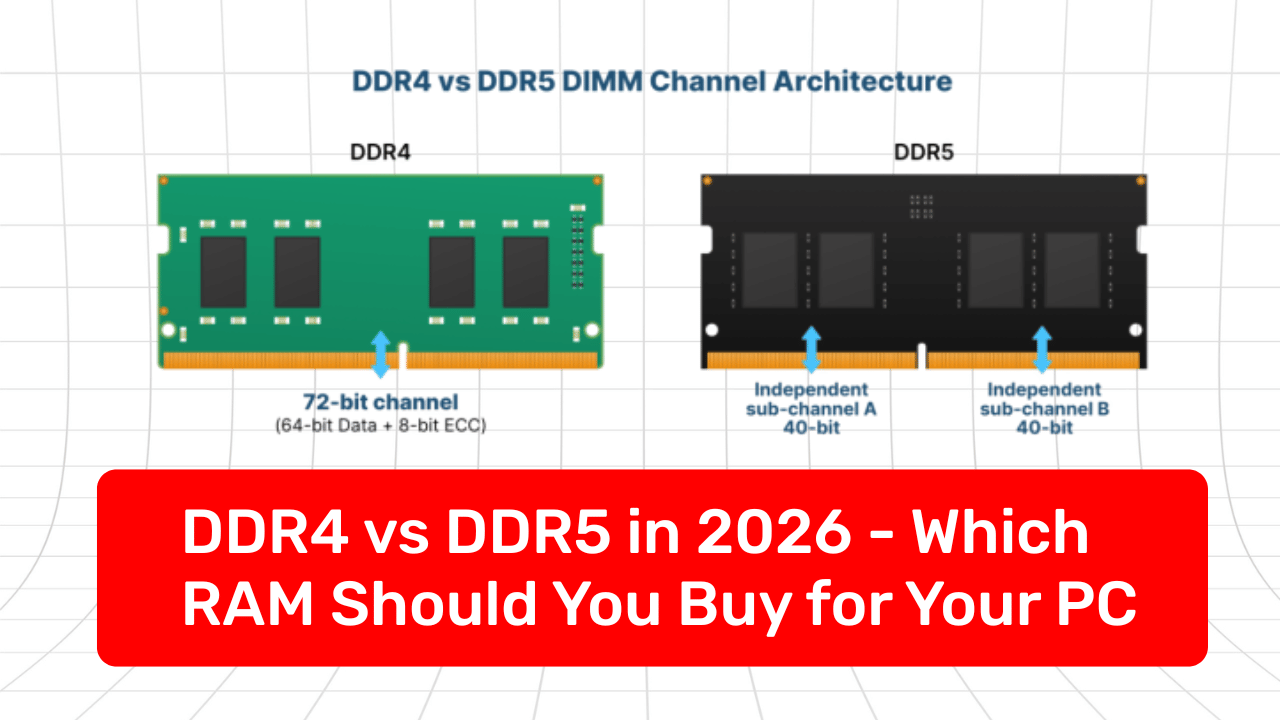
Should I upgrade from DDR4 to DDR5 for gaming?
Upgrading from DDR4 to DDR5 for gaming typically requires a new motherboard and CPU that support the DDR5 standard, making it a more substantial platform upgrade rather than just a RAM swap. The performance gains from DDR5 are noticeable, offering higher speeds and bandwidth, but the cost can be significant. It's recommended if you're already planning a full system overhaul to capitalize on the latest generation's benefits and future-proof your build.
Will 64GB DDR5 make a difference for gaming?
For pure gaming purposes, 64GB of DDR5 RAM generally offers negligible performance gains over 32GB. Most games simply do not utilize that much memory. However, 64GB becomes beneficial for professional workloads like heavy video editing, 3D rendering, or running multiple virtual machines alongside gaming. For a dedicated gaming PC, the extra cost of 64GB is usually better allocated to a more powerful GPU or CPU. It's an overkill for just games.
What is the sweet spot for DDR5 speed and latency for gaming?
The current sweet spot for DDR5 speed and latency for gaming is typically around 6000MHz with a CAS Latency (CL) of 30 or 32. This configuration strikes an excellent balance between high bandwidth and low access times, providing optimal performance for most modern gaming systems. Kits like 6000MHz CL30 or 6000MHz CL32 offer fantastic value and performance without venturing into extremely expensive or unstable overclocking territories. This range offers a noticeable uplift.
Still have questions? What exact games are you trying to play, and what's your current setup like?
Alright, so everyone's been asking, "How much DDR5 for gaming do I really need?" It's a question I've seen pop up everywhere, and honestly, it can get a bit confusing with all the different opinions out there. You're trying to figure out if you should go all out or save some cash, and I totally get that struggle. I mean, nobody wants to spend extra money on something that won't even give them a noticeable performance boost, right? It's all about getting the most bang for your buck while ensuring your games run super smoothly.
The DDR5 Advantage: What's the Big Deal?
So, DDR5 memory is the latest and greatest generation of RAM, and it brings some pretty significant improvements over older DDR4 sticks. We're talking about higher speeds, increased bandwidth, and better efficiency, which all translate into a more responsive system. For gamers, this means faster loading times and smoother gameplay, especially in titles that are very memory-intensive. It's a solid upgrade if you're building a new PC or looking to significantly boost an existing setup that supports it.
You see, the increased clock speeds of DDR5 allow your CPU to access data much quicker, which is crucial for maintaining high frame rates in demanding games. Plus, it handles more complex workloads with greater ease, ensuring your system doesn't bottleneck when things get hectic. It's not just about raw speed though, the underlying architecture also helps manage data flow more efficiently, giving your entire system a snappier feel overall.
Decoding DDR5 Capacity: The Sweet Spot for Gamers
When it comes to how much DDR5 RAM you need for gaming, it really boils down to a few key factors, but there's a definite sweet spot most gamers should aim for. Honestly, throwing tons of RAM at your system won't always magically improve your FPS if other components are holding you back. It's about balance, and making sure your memory complements your CPU and GPU effectively.
Is 16GB DDR5 Still Enough for Modern Gaming?
For a lot of games out there right now, 16GB of DDR5 RAM is generally considered the minimum viable amount for a good gaming experience. Most current titles run perfectly fine on 16GB, especially if you're playing at 1080p or 1440p resolutions. You'll find that many popular games don't actually consume more than 10-12GB of RAM, leaving some headroom for your operating system and background applications. It's a perfectly respectable amount that delivers solid performance without breaking the bank for casual to moderate gamers.
However, if you're someone who likes to multitask while gaming, maybe you have Discord running, a browser with multiple tabs open, or even streaming software, 16GB might start to feel a bit tight. You might notice slight stutters or longer load times as your system struggles to manage everything simultaneously. So, while it's good, it might not be ideal for power users or those who really push their systems beyond just gaming.
Why 32GB DDR5 is Becoming the New Standard
Honestly, if you're building a new high-end gaming PC today, or you want to future-proof your setup for the next few years, I'd strongly recommend going for 32GB of DDR5 RAM. This amount provides ample overhead for even the most demanding AAA titles, ensuring buttery-smooth performance regardless of what's happening on screen. It truly makes a noticeable difference in games that are known to be memory-hogs, like flight simulators or expansive open-world RPGs.
Plus, with 32GB, you won't have to worry about closing background apps or limiting your browser tabs while gaming. You can stream, record, and play simultaneously without a hiccup, which is fantastic for content creators and streamers. It just gives you that peace of mind, knowing your RAM won't be the bottleneck in any scenario. This extra capacity also becomes super beneficial when you consider upcoming game releases that will likely demand even more resources, so it’s a smart investment.
- Faster loading times in memory-intensive games.
- Smoother multitasking without performance dips.
- Better stability and fewer stutters in demanding scenarios.
- Future-proofing for upcoming game titles and applications.
Considering Speed and Latency: It's More Than Just Capacity
Okay, so capacity is important, but it's not the only factor. When you're looking at DDR5, you also need to pay attention to its speed (measured in MHz) and its latency (measured in CL or CAS Latency). Higher speeds are generally better, but lower latency is also crucial for responsiveness. It's a delicate balance, and sometimes a slightly lower speed with much better latency can outperform a higher speed with high latency. You need to look at both numbers together.
For example, a 6000MHz CL30 kit is generally considered excellent for gaming, offering a great blend of speed and low latency. Going much higher in speed, like 7200MHz or 8000MHz, often comes with significantly higher latency, which can negate some of the speed benefits. So, don't just chase the biggest number; really consider the overall balance. It's all about finding that sweet spot where your CPU can efficiently access data without unnecessary delays.
The Impact of Speed on Gaming Performance
Faster DDR5 speeds can provide a tangible boost to your frame rates, especially if your CPU is very powerful, like a high-end Intel i9 or AMD Ryzen 9. These processors can really take advantage of the increased bandwidth to feed data to your GPU quicker. Some games are also more sensitive to memory speed than others, showing larger improvements with faster RAM. It's not a universal massive jump, but it certainly helps to squeeze out every bit of performance.
In my experience, moving from something like 4800MHz to 6000MHz can definitely be noticeable, especially in minimum frame rates, which helps avoid those annoying stutters. But beyond a certain point, the gains become marginal and the cost starts to outweigh the benefits. It's why I always tell people to research specific game benchmarks for their chosen RAM speed; you might find diminishing returns fairly quickly.
Understanding Latency and Why It Matters
Latency, or CAS Latency (CL), essentially measures the delay between when your CPU requests data from the RAM and when the RAM actually delivers it. A lower CL number means less delay, which translates to quicker responses in your games. While DDR5 has higher raw latency numbers compared to DDR4, its much higher speeds often compensate for this, leading to better effective latency. But within DDR5, lower CL is always better.
So, when you're comparing two DDR5 kits with similar speeds, always lean towards the one with the lower CL rating. It truly impacts how snappy your system feels and how quickly frames can be rendered, especially in competitive titles where every millisecond counts. It's a critical factor that many people overlook when they're solely focused on the big MHz number, but honestly, it can make a real difference in the overall gaming experience. Related search often shows people asking about CL values.
Future-Proofing Your Gaming Setup with DDR5
Investing in DDR5 now means you're setting yourself up nicely for the future. As games become more graphically intensive and complex, their memory requirements will inevitably grow. Having a solid DDR5 foundation, especially with 32GB, means you won't have to worry about upgrading your RAM again for quite a while. It's a key component in a truly modern gaming rig, and it helps ensure longevity for your system.
How Much DDR5 for Gaming in the Next 3-5 Years?
Looking ahead, I think 32GB of DDR5 will become the absolute standard for gaming within the next 3-5 years. Game developers are always pushing boundaries, and with consoles also adopting more advanced memory architectures, PC games will follow suit. Already, some PC ports from current-gen consoles are showing increased RAM usage, making 16GB feel a bit constrained at times. To resolve any future performance hiccups, 32GB is the way to go.
So, if you're building a new PC and want it to remain relevant and capable for several years without needing major upgrades, start with 32GB of DDR5. It gives you that necessary headroom and ensures you're ready for whatever new gaming experiences come our way. It's definitely the more sensible long-term investment for serious gamers and enthusiasts. You want to avoid that feeling of being just shy of enough memory when a new title drops.
Conclusion: Making the Right DDR5 Choice
Ultimately, when deciding how much DDR5 for gaming you need, consider your budget, your current gaming habits, and your plans for future upgrades. For most gamers, 16GB DDR5 is currently sufficient, especially for 1080p and 1440p resolutions, but it’s rapidly becoming the minimum. If you want true future-proofing, seamless multitasking, and no compromises on the most demanding titles, 32GB DDR5 is definitely the better and smarter choice. Don't forget to pay attention to both speed and latency; aim for a good balance like 6000MHz CL30. It's all about making an informed decision that enhances your specific gaming journey.
Optimal DDR5 capacity for gaming, 16GB vs 32GB for modern games, DDR5 speed benefits and latency impact, future-proofing gaming builds with DDR5 RAM, understanding system requirements for DDR5, cost-effectiveness of DDR5 upgrades, resolve gaming RAM queries.
35

When Will DDR5 Prices Drop 2026 Memory Market Forecast Unibetter Ddr5 Price 2026 600x403 . 12 Best DDR5 RAM For Gaming In 2026 Tested Reviewed Best DDR5 RAM For Gaming . 2026 8 16 32 Ktc Opengraph Blog Gaming The Ultimate Ram Guide For Gamers . Tipos De Memoria RAM Y Sus Capacidades En 2026 Gu A Para USA Mejor Ram Para Gaming 2026 Ddr5 32gb 6000mhz. The DRAM Shortage Is Forcing Me To Rethink Every Build And Upgrade I


Best RAM For Gaming In 2026 Our Top DDR5 And DDR4 Memory Picks PC Guide Corsair Dominator Titanium RGB 64GB 6600MTs CL32 Front Profile Image By PC Guide . Top 5 Best Budget DDR5 RAM 2025 Budget RAM Kits For Gaming YouTube . How Much RAM Do You ACTUALLY Need For Gaming 2025 YouTube . Server Memory Prices To Double Year Over Year In 2026 LPDDR5X Prices . DDR5 RAM Shortage Price Explosion In 2025 Country By Country Review Ddr4 Vs Ddr5

Best RAM For Gaming In 2026 I Ve Tested The Best DDR4 And DDR5 RAM To 650 80 . Examining DDR4 PC Build Options In 2026 With High DDR5 Prices A PC . How Much DDR5 RAM Do You Really Need For Your Next PC Build NoobFeed Gpu Pricing Ddr5 Impact.webp. How Much RAM Do You Need For Gaming 2026 How Much Memory For Gaming.webp. How Much RAM Do I Need For Gaming Images BrandPromos PowerPage RAMgaming Image6


DDR4 Vs DDR5 In 2026 Which RAM Should You Buy For Your PC Archives DDR4 Vs DDR5 In 2026 Which RAM Should You Buy For Your PC . Why Is 6000MT S DDR5 The Sweet Spot For PC Gaming Kingston Technology Ktc Articles Blog Gaming How Much Memory For Gaming Sm . How Much RAM Do You Really Need For Gaming Work In 2025 DDR5 Focus . Best DDR5 RAM For Gaming 2024 Which DDR5 RAM Should You Buy In 2024 . DDR5 Vs DDR6 RAM Specs Comparison For AI HPC Gaming CUDIMM DDR5 Deep Dive 9600 MTs Benchmarks CKD Differences And Z890 800x600




5 Best DDR5 RAM For Gaming In 2024 Best RAM For Gaming YouTube . How Much RAM Do You Really Need For Gaming Work In 2025 DDR5 Focus . How Much DDR5 RAM Do You Need For Gaming In 2023 16 GB 32 GB 64 GB 2a723 1920 . How Much Should 8GB DDR5 Laptop RAM Cost Kingspec Tech 4 Bd0e73af 08e7 4c2a A507 . How Much RAM Do You Need For Gaming In 2025 DDR5 Vs DDR4 Guide How Much Ram Do You Need For Gaming In 2025.webp


Memory Matters For Gaming In 2024 CORSAIR MM Graph 2024 000.format Jpeg . DDR4 Vs DDR5 How Much Faster Is It Multiple DDR5 RAM Modules From Various Brands . DDR5 Shortage Our Analysis Of Prices Figures And For 2025 Ddr5 6400 Cl32 2x16. How Much RAM Do You Really Need For Gaming Work In 2025 DDR5 Focus . DDR4 Vs DDR5 Best RAM For Gaming PCs In Early 2026 32GB Kits Compared Best Ram Ddr4 Vs Ddr5 Early 2026


Exclusive DDR5 RAM Kit Prices Surge 15 This Month As DRAM Hikes Reach Gr Cop 2 2 1280x683 . How China S CXMT Could Rescue Gamers In 2026 With DDR5 Memory Up To Ddr5 Ram Trident Featured . DDR4 Vs DDR5 In 2026 Gaming Builds NoobFeed Ddr5 1 . How Much RAM Do You Really Need For Gaming Work In 2025 DDR5 Focus . DDR4 Vs DDR5 RAM What S The Difference And Which One Should You Buy In Latest Tech Showdown Choosing Between DDR4 And DDR5 RAM For Your Gaming Rig In 2024