Discover if computer games genuinely enhance intelligence and cognitive skills for adult gamers. Many wonder if their time spent in virtual worlds actually translates to real-world benefits. This comprehensive guide explores the science behind gaming and brain development, addressing common concerns for busy individuals balancing work, family, and relaxation. We delve into how various game genres can sharpen focus, improve problem-solving abilities, and even boost social intelligence, offering practical insights and recommendations. Uncover the truth about gaming's impact on your mind, learn about the types of games that offer the most cognitive advantages, and find tips for integrating smart gaming into your lifestyle without compromising other responsibilities. Explore current trends, understand the psychological benefits, and see how the thriving US gaming community continues to evolve, proving that gaming can be more than just entertainment. This resource is designed for the modern gamer seeking an informed perspective on their passion.
Related games- Roblox Coins: 7 Legit Ways to Boost Your Stash Now
- Guide to Roblox Scripts APK 2026 How to Use Safely
- How to Master Roblox with Backbone Support 2026
Does consistent gaming actually boost your IQ?
While gaming may not directly increase your IQ score in a traditional sense, it significantly enhances various cognitive abilities that contribute to intelligence. Skills like problem-solving, strategic thinking, reaction time, and spatial reasoning are demonstrably improved. These improvements make you functionally smarter by sharpening your mental toolkit, rather than simply raising a numerical score.
What specific cognitive skills do video games improve?
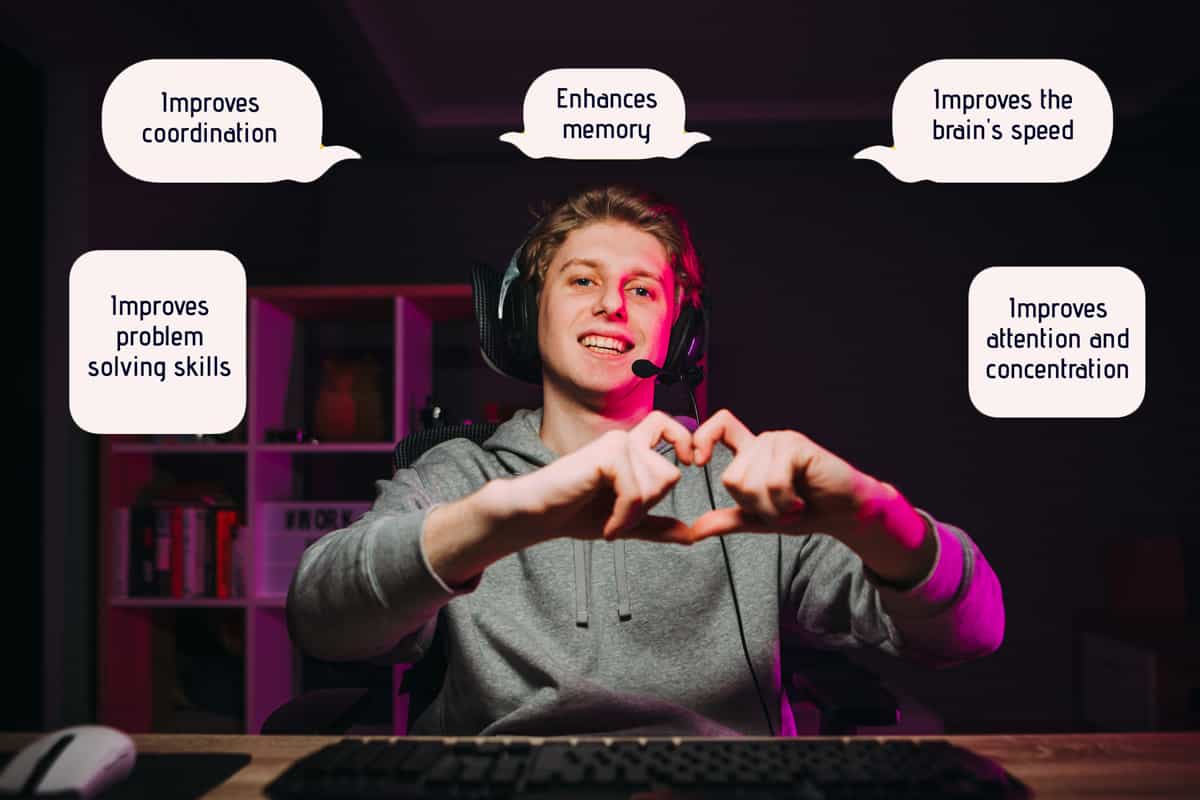
Video games improve a wide array of cognitive skills including attention span, visual processing speed, spatial navigation, working memory, and decision-making under pressure. Strategy games foster executive functions like planning and foresight, while action games enhance hand-eye coordination and rapid response. Multiplayer games also cultivate social cognition, communication, and teamwork skills.
Are there negative brain impacts from excessive gaming?
Yes, excessive gaming without moderation can lead to negative impacts such as sleep disturbances, decreased attention to real-world responsibilities, and sometimes, a dependency that affects mental well-being. It is crucial to balance gaming with other activities like physical exercise, social interactions, and professional duties to ensure overall brain health and a balanced lifestyle.
Which games are best for improving strategic thinking?
For enhancing strategic thinking, real-time strategy (RTS) games like StarCraft II, grand strategy titles such as Europa Universalis IV, and turn-based tactics games like XCOM 2 are highly recommended. These genres demand complex long-term planning, resource management, tactical execution, and adaptability to constantly changing conditions, sharpening your strategic mind considerably.
How can I maximize the brain benefits of my gaming sessions?
To maximize brain benefits, diversify the genres you play to engage different cognitive areas. Actively seek out games that challenge your intellect, focusing on learning and problem-solving. Play in moderation, integrate social gaming for cooperative challenges, and take regular breaks. Reflect on your in-game strategies to reinforce learning and apply lessons to real-world scenarios.
Do competitive online games make you smarter socially?
Competitive online games, especially team-based ones, absolutely enhance social intelligence. They require constant communication, conflict resolution, understanding diverse perspectives, and coordinating complex strategies with teammates. This fosters teamwork, leadership, empathy, and adaptability—skills invaluable in real-world social and professional environments, helping you navigate complex group dynamics more effectively.
Is there an age limit to gaining cognitive benefits from gaming?
No, there is no strict age limit to gaining cognitive benefits from gaming. While children and adolescents show significant developmental gains, adults, including older adults, can also benefit. Gaming helps maintain cognitive plasticity, improve reaction times, and enhance memory and problem-solving skills, making it a valuable tool for lifelong brain health and mental agility at any age.
Hey fellow gamers! Ever found yourself deep into a strategy game or a fast-paced shooter and wondered if all this screen time is actually making you smarter? For many of us, gaming is a cherished escape, a way to unwind after a long day of work or family responsibilities. We value that relaxation, the fun, and the chance to connect with friends. But what if your passion for virtual worlds also offered genuine cognitive benefits? The question “do computer games make you smarter” is more relevant than ever for the average US gamer, often around 36 years old, who balances a career and family with their playtime.
We all know the pain points: finding time to game, dealing with setup glitches, optimizing performance on a budget, and staying current without succumbing to hype. Amidst these challenges, it is refreshing to consider that our hobby might be a secret weapon for brain health. Recent data shows that 87 percent of US gamers play regularly, often averaging over 10 hours a week, indicating a significant investment of time. This article cuts through the noise to explore the real science, offering practical solutions and insights into how your favorite pastime can genuinely sharpen your mind, improve skills, and even enhance your social life. No fluff, just facts for the discerning gamer who wants to make every minute count.
Do Computer Games Really Make You Smarter?
Yes, many computer games can indeed make you smarter by stimulating various cognitive functions. Research suggests that engaging with certain game genres can lead to measurable improvements in areas like problem-solving, attention, memory, and spatial reasoning. For instance, studies have shown that strategy games can boost executive functions, while action games can enhance reaction times and visual processing. It is not about playing any game, but rather the type of game and how you engage with it.
The brain is a muscle, and like any muscle, it benefits from exercise. Complex virtual environments and challenging scenarios in games force your brain to adapt, learn, and process information quickly. This continuous mental workout builds new neural pathways and strengthens existing ones, contributing to overall cognitive agility. This is particularly beneficial for adult gamers who seek enjoyable ways to maintain or even improve their mental sharpness amidst the demands of modern life.
Which Game Genres Offer the Biggest Brain Boost?
Different game genres target distinct cognitive areas, offering varied benefits. Understanding these can help you choose games that align with your desired mental workout:
Strategy Games (RTS, Grand Strategy, Turn-Based Tactics): Titles like StarCraft II, Civilization VI, or Europa Universalis IV demand complex planning, resource management, foresight, and tactical decision-making under pressure. They are excellent for developing executive functions, critical thinking, and long-term planning.
Puzzle Games (Portal, The Witness, Tetris): These games are designed to challenge logic, spatial reasoning, pattern recognition, and problem-solving. They are fantastic for short bursts of intense mental stimulation and improving working memory.
Action Games (First-Person Shooters, Battle Royales): While often seen as purely recreational, games like Call of Duty or Apex Legends significantly improve reaction time, hand-eye coordination, spatial awareness, and the ability to process rapidly changing visual information. The quick decision-making in high-stakes moments is a strong cognitive exercise.
Role-Playing Games (RPGs) & Adventure Games: Games such as The Witcher 3 or Baldur's Gate 3 often involve complex narratives, moral dilemmas, resource management, and strategic combat. They enhance decision-making, narrative comprehension, memory recall, and often require planning character progression and inventory management.
Simulation Games (City Builders, Tycoons): From managing a city in Cities: Skylines to running a theme park, these games train organizational skills, economic thinking, problem-solving, and system optimization. They teach cause-and-effect and long-term consequences.
Diversifying your gaming diet across these genres can provide a well-rounded cognitive workout, hitting multiple brain functions for comprehensive improvement.
How Do Games Improve Problem-Solving and Decision-Making?
Computer games are essentially a series of problems to solve, often with immediate feedback. Whether you are figuring out how to bypass a guard patrol in a stealth game, optimizing a production line in a factory simulator, or strategizing to counter an opponent in an esports title, your brain is constantly engaged in problem-solving loops.
This process typically involves:
Analysis: Breaking down complex situations into manageable parts.
Hypothesis Generation: Forming educated guesses about potential solutions.
Experimentation: Trying out different approaches and observing the outcomes.
Adaptation: Learning from failures and refining strategies.
This iterative cycle trains your brain to approach challenges systematically and creatively. For busy adults, this translates into better real-world analytical skills, making you more adept at troubleshooting work issues or planning family logistics. The pressure of in-game decisions, often with limited information, also hones your ability to make quick, effective choices, a skill invaluable in everyday life.
Can Gaming Enhance Your Social Skills and EQ?
Absolutely. Modern gaming is increasingly social, with multiplayer experiences dominating trends. Around 60 percent of gamers regularly engage in social play, often through platforms like Discord, in-game chat, or cross-play titles. This constant interaction significantly boosts social intelligence and emotional quotient (EQ).
Consider cooperative games like Phasmophobia, Lethal Company, or team-based esports like Valorant. To succeed, players must:
Communicate Effectively: Clearly conveying information, giving and receiving instructions under pressure.
Collaborate: Working towards a common goal, understanding roles, and coordinating actions.
Empathize: Understanding teammates' frustrations, celebrating successes, and offering support.
Negotiate & Resolve Conflicts: Managing different playstyles, egos, and strategies within a team.
These skills are directly transferable to real-world social and professional environments. For many adult gamers, online communities become vital social outlets, providing a sense of belonging and opportunities to practice valuable interpersonal skills in a low-stakes environment. It is a fantastic way to destress and connect after a demanding day.
What About Reaction Time and Hand-Eye Coordination?
Fast-paced games are undisputed champions for improving reaction time and hand-eye coordination. From dodging projectiles in a bullet-hell game to executing a perfect headshot in an FPS, these titles demand split-second decisions and precise motor control. The constant visual input and rapid button presses or mouse movements train your brain and body to work in seamless synchronicity.
This isn't just about gaming performance; these enhancements have real-world implications:
Driving: Improved reaction time can be crucial for avoiding accidents.
Sports: Better hand-eye coordination can translate to physical activities.
Everyday Tasks: Enhanced dexterity and quicker responses can make everyday tasks, from catching a dropped item to navigating a busy street, feel more fluid.
For gamers juggling multiple responsibilities, these benefits can help keep them sharp and agile, even outside the digital realm. The consistent practice in a dynamic virtual environment offers a unique form of cognitive-motor training that is both engaging and effective.
How to Balance Gaming for Brain Benefits Without Overdoing It?
Balancing gaming with a busy life is a common pain point for adult gamers. While games offer cognitive benefits, excessive gaming without moderation can lead to negative impacts like sleep disruption or neglect of other responsibilities. The key is mindful gaming, integrating it strategically into your routine.
Here are some tips:
Set Time Limits: Use timers or in-game reminders. Instead of open-ended sessions, commit to 60-90 minutes, then take a break or switch activities. Many modern consoles and PC launchers have built-in parental control features that can serve this purpose for adults too.
Diversify Your Activities: Ensure gaming is one part of a balanced lifestyle that includes physical activity, social interactions outside of gaming, hobbies, and family time.
Prioritize Quality Over Quantity: Choose games that genuinely challenge your mind rather than just repetitive grinding. A well-designed puzzle or strategy game for an hour can be more beneficial than three hours of mindless activity.
Game with a Purpose: Approach gaming with an intent to learn or improve, whether it is mastering a new strategy, coordinating better with teammates, or solving a tricky puzzle. This turns leisure into a learning opportunity.
Take Regular Breaks: Even during longer sessions, stand up, stretch, and give your eyes a rest. This prevents fatigue and keeps your mind fresh.
Remember, the goal is to integrate gaming as a positive, enhancing force in your life, not a distraction from it. This month's trends show a rise in 'cozy games' and free-to-play options that often lend themselves well to shorter, more digestible play sessions, making balance easier.
Are There Specific Games Recommended for Cognitive Improvement?
While personal preference plays a huge role, certain games consistently rank high for their cognitive benefits:
Portal 2: An iconic puzzle-platformer that demands creative problem-solving and spatial reasoning. Its unique mechanics force players to think outside the box.
Civilization VI: A grand strategy game that requires long-term planning, resource management, diplomatic negotiation, and adaptation to changing global conditions.
StarCraft II: A real-time strategy (RTS) behemoth that pushes players to multitask, make rapid decisions, manage resources, and execute complex build orders under immense pressure. It is an esports staple for a reason.
Tetris Effect: Connected: A visually stunning take on the classic puzzle game, improving spatial reasoning, reaction time, and pattern recognition in a highly engaging package.
Satisfactory/Factorio: Automation and factory simulation games that hone complex logistical planning, optimization, and problem-solving at scale.
Sea of Thieves: A cooperative adventure game requiring teamwork, navigation, communication, and real-time decision-making with a crew, perfect for social cognitive skills.
When looking for new games, especially on a budget or for limited time, consider checking out indie titles or free-to-play options which often offer deep, engaging gameplay without a hefty price tag or endless time commitment. VR experiments also continue to push cognitive boundaries, though hardware costs can be a factor.
How Does Mobile Gaming Compare to PCConsole for Brain Benefits?
Mobile gaming, often overlooked by traditionalists, has become a powerhouse in the US gaming landscape, with mobile dominance continuing into 2026. This platform offers unique avenues for cognitive enhancement, especially for busy individuals.
Mobile games provide:
Accessibility and Convenience: You can play during commutes, lunch breaks, or while waiting, fitting mental exercises into small gaps in your day. This makes it easier to consistently engage in 'brain training' without needing dedicated setup time.
Diverse Genres: From intricate puzzle games like Monument Valley to strategic card battlers like Hearthstone, and even simplified city builders, mobile offers a vast array of cognitively stimulating titles.
Targeted Brain Training: Many mobile apps are specifically designed as 'brain trainers' that focus on memory, attention, and processing speed, offering a structured approach to cognitive improvement.
While PC/console games often offer deeper, more immersive experiences that demand prolonged engagement, mobile gaming provides consistent, bite-sized opportunities for cognitive workouts. Cross-play titles further blur the lines, offering flexible ways to connect and challenge your mind regardless of your device. The key is finding mobile games that genuinely challenge you, not just simple time-fillers.
What Are the Latest Trends in Cognitive Gaming?
The gaming landscape is always evolving, and several trends are emerging that directly impact how computer games make you smarter:
Gamified Learning Platforms: Educational apps and platforms are increasingly incorporating game mechanics to make learning more engaging and effective, showing how core gaming principles can be applied to cognitive development.
Adaptive Difficulty & AI: Games are becoming smarter, with AI that adjusts difficulty based on player performance. This ensures that players are consistently challenged at their optimal learning threshold, preventing boredom and frustration.
Social and Cooperative Focus: As mentioned, the rise of social games, including 'cozy games' focused on collaboration over competition, emphasizes communication, empathy, and teamwork, fostering unique social cognitive benefits.
Esports and Strategic Depth: The continued growth of esports viewing and participation, especially among Gen Z and Millennials, highlights the strategic depth and mental prowess required. Analyzing professional plays can even offer observational learning for cognitive improvement.
VR/AR Cognitive Experiences: While still niche due to hardware, VR and AR are exploring immersive experiences that push spatial reasoning, memory, and problem-solving in ways traditional screens cannot. These experiments are continuously evolving.
These trends demonstrate a growing recognition of gaming's potential beyond entertainment, positioning it as a powerful tool for continuous cognitive development in 2026 and beyond.
So, do computer games make you smarter? The evidence strongly suggests they do, provided you engage thoughtfully and in moderation. From sharpening your reaction time in a shooter to honing your strategic genius in an RTS, gaming offers a unique and enjoyable pathway to cognitive enhancement. For the modern gamer balancing life's demands, it is a fantastic way to unwind, connect, and keep your brain in top shape without breaking the bank or taking too much time.
What's your biggest gaming challenge when trying to maximize cognitive benefits? Comment below!
FAQ Section
Q: Is there an optimal amount of time to game for cognitive benefits?
A: Research suggests moderate gaming, typically 1 to 9 hours per week, shows the most significant cognitive gains. Excessive gaming (over 20 hours per week) can lead to diminishing returns or negative impacts, similar to any activity done in excess. Balance is key to maximizing benefits without adverse effects on sleep or other responsibilities.
Q: Can older adults benefit from computer games for brain health?
A: Absolutely. Studies indicate that games, particularly those requiring strategy, memory, and quick decision-making, can help maintain cognitive function in older adults, improving attention, processing speed, and executive control. It is a fun and engaging way to potentially slow cognitive decline and improve mental agility across age groups.
Q: Do casual mobile games offer any brain benefits?
A: Yes, even many casual mobile games can offer cognitive benefits. Puzzle games like Candy Crush can improve pattern recognition and planning. Games requiring quick taps and swipes enhance fine motor skills and reaction time. While not as complex as PC strategy games, they provide accessible, frequent mental workouts throughout the day.
Q: How can I tell if a game is actually making me smarter?
A: Look for subjective improvements in your daily life: Are you solving problems quicker at work? Feeling more focused? Can you multitask better? Also, observe your in-game performance: Are you adapting strategies faster? Learning new mechanics more easily? These are good indicators. Objective cognitive tests before and after consistent play could also provide measurable data.
Q: Are there any downsides to relying on games for cognitive improvement?
A: While beneficial, relying solely on games for cognitive improvement isn't recommended. A balanced approach includes physical exercise, a healthy diet, sufficient sleep, and diverse real-world social interactions. Over-reliance can lead to social isolation, eye strain, or neglecting other important life areas. Moderation and variety are crucial.
Cognitive enhancement via problem-solving and strategy games. Improved reaction time and decision-making skills. Enhanced spatial awareness and multitasking abilities. Social benefits through cooperative online play. Mental flexibility and adaptability. Stress reduction and mental well-being for adult gamers.
34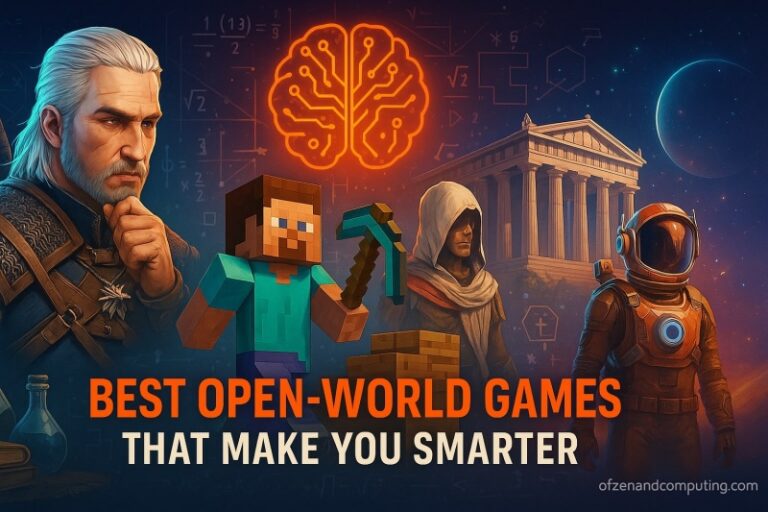


10 Best Open World Games That Make You Smarter March 2026 Best Open World Games That Make You Smarter 768x512 . Learning Through Gaming Can Video Games Make You Smarter YouTube . Chess Or Video Games Which Actually Makes You Smarter The Answer May Do Video Games Make You Smarter Video Game Benefits . Do Games Actually Make You Smarter Com . Do Video Games Make You Smarter YouTube


Do Video Games Make You Smarter The Hidden Benefits Revealed YouTube . Does Playing Video Games Make You Smarter YouTube . Top 5 Games That Make You Smarter YouTube Hqdefault . How Can Video Games Make You Smarter By Jad EL SOUFI On Prezi 3 0 . Do Video Games Make You Smarter Expert Guide Do Video Games Make You Smarter


New Ways Video Games Improves IQ Remarkably Video Games Makes You Smarter 2048x1075 . Can Video Games Make You Smarter GAMER EXPLAINER YouTube . Do Video Games Make You Smarter What Research Says Game Quitters Ways Video Games Make You Smarter . These 15 Video Games Will Make You Smarter Video Games That Will Make You Smarter . Video Games Make You Smarter Backed Up By Research Healthy Gamer Make You Smarter


Brain Health Do Video Games Make You Smarter Do Video Games Make You Smarter Or Dumber . Which Video Games Will Make You Smarter Top 15 Picks 3798195 1024x683 . Do Video Games Make You Smarter The Science Behind Cognitive Benefits Image1 1 . Gamer Science Are Video Games Making Kids Smarter Infographic Do Video Games Make Us Smarter Webtease . Can Games Make You Smarter Gamelevate Com Gaming Smarter 2 1160x653


AI In Games How Video Games Are Becoming Smarter In 2025 Add A Subheading 2 1200x750 . Video Games Can Test Your But Can They Make You Smarter 4 Can Video Games Make You Smarter . Can Games Make You Smarter Gamelevate Com Gaming Smarter . Opinion Can Playing Computer Video Games Make You Smarter University XP Smarter . Do Puzzle Games Make You Smarter The Science Of Brain Training 1771523903




Can Playing Video Games Make You Smarter University XP Smart Games . Do Video Games Make You Smarter One Surprising Genre Leads The Rest Genre . Chess Or Video Games Which Actually Makes You Smarter The Answer May What Board Games Make You Smartest . Which Video Games Will Make You Smarter Top 15 Picks Non Binary Person Using Computer Laptop Smiling Pointing Head With One Finger Great Idea Thought Good Memory 1536x1024 . Top 5 AI Powered Game Engines 2025 Smarter Game Development Ai Game Development 2024.webp


Do Video Games Make You Smarter One Surprising Genre Leads The Rest 3bb59d42 8d02 47c6 B417 2175227171 . Do Video Games Make You Smarter At Emaze P378095 . Can Board Games Make You Smarter Tabletop Game Planet Do Board Games Make You Smarter 495x768 . Outsourcing Game Development Build Faster Smarter In 2026 Game Development