Understanding CanQuery in Roblox is crucial for developers aiming to create high-performance and visually fluid games. This powerful property, often overlooked by beginners, dictates whether an instance can be detected by raycasts, spatial queries, or BasePart.GetTouchingParts(). By strategically enabling or disabling CanQuery, creators can significantly optimize game performance, reduce unnecessary computations, and enhance the overall player experience. It prevents objects that are purely decorative or behind transparent layers from being needlessly processed, leading to smoother gameplay and quicker script executions. Mastering CanQuery allows for more efficient collision detection and interaction scripting, making it a fundamental tool for any serious Roblox developer looking to elevate their game's technical polish and responsiveness in the bustling virtual world of 2024. Knowing how and when to use CanQuery can drastically reduce lag, improve frame rates, and ensure your creations are as immersive and enjoyable as possible, retaining players longer.
Okay, so you're curious about 'CanQuery' in Roblox? I get why this one might seem a bit technical at first, but honestly, it's a super cool tool that every Roblox creator should know about. Think of CanQuery like a special switch you can flip on parts in your game. When it's 'on,' that part can be 'seen' by things like a laser beam (raycast) or when another object tries to figure out what it's touching. If it's 'off,' those detection tools just ignore it.
Why does this matter? Well, imagine building a huge, detailed city. You've got tons of tiny little decorations that players can't even interact with. If every single one of those decorations is constantly being checked by the game engine for collisions or interactions, your game can get really slow, really fast. It's like asking your computer to do a million tiny, useless tasks.
By turning CanQuery off for those purely visual or non-interactive items, you're telling the game engine, 'Hey, don't worry about these guys for physics or raycasts.' This massively frees up your game's performance, making it run smoother and faster for everyone playing. It's a simple property, but it's incredibly powerful for optimizing your creations and making them feel super polished. You've got this, mastering these little details makes a huge difference!
What is CanQuery in Roblox?
CanQuery is a boolean property for BaseParts in Roblox that determines if an instance can be detected by spatial queries like raycasts, region queries, or `GetTouchingParts()`. When true, it participates in these checks; when false, it's ignored. It's crucial for optimizing game performance by preventing unnecessary computations on purely visual or non-interactive objects, ensuring smoother gameplay experiences for players.How does CanQuery improve Roblox game performance?
CanQuery improves performance by reducing the workload on the physics engine and scripting systems. By setting CanQuery to false for non-interactive or decorative parts, you prevent them from being included in expensive spatial calculations. This minimizes unnecessary processing, leading to faster script execution, fewer lag spikes, and an overall more fluid and responsive game environment, especially in complex builds.When should I disable CanQuery for an object?
You should disable CanQuery for objects that are purely visual, static decorations, or parts that players cannot or should not interact with via raycasts or collisions. Examples include small rocks, distant scenery, UI elements represented by parts, or background props that don't need to block lasers or trigger scripts. Disabling it reduces computational overhead for these elements.Can CanQuery affect character movement in Roblox?
Yes, CanQuery can indirectly affect character movement. If a crucial platform or obstacle has CanQuery set to false, characters might pass through it if your game logic relies on spatial queries for collision rather than the default physics engine's collision. However, CanCollide is generally the primary property for physical character interaction with parts.Where can I find the CanQuery property in Roblox Studio?
The CanQuery property is found within Roblox Studio's Properties window when you select a `BasePart` (like a Part, MeshPart, or UnionOperation). Scroll down to the "Data" or "Behavior" section, and you'll see a checkbox labeled "CanQuery." You can toggle it directly there or programmatically via scripts using `part.CanQuery = false`.Most Asked Questions about CanQuery Roblox - The Ultimate Living FAQ for 2024
Welcome to the ultimate living FAQ about CanQuery in Roblox, meticulously updated for the latest patches and best practices of 2024! If you're looking to squeeze every drop of performance out of your Roblox creations, understand complex interactions, or just finally grasp what this often-misunderstood property does, you've landed in the right place. We're breaking down everything you need to know, from beginner concepts to advanced optimization tricks, ensuring your games run smoother and feel more professional than ever before. Let's tackle those burning questions and get your Roblox projects flying!
Beginner Questions
What's the simplest way to understand CanQuery?
Think of CanQuery as a filter for your scripts. If a part has CanQuery set to 'false', your raycasts or 'GetTouchingParts()' calls will simply ignore it, even if it's visible. It's like making a part invisible to your detection code, which is super useful for making your game run faster by cutting down on unnecessary checks.
Does CanQuery affect a part's visibility?
Nope, not at all! CanQuery has absolutely no impact on whether a part is visible or transparent in your game. A part can be fully visible with CanQuery off, or completely invisible with CanQuery on. It's purely about whether your code can 'detect' it using specific spatial queries, not about its appearance.
Builds & Classes
How does CanQuery impact custom hitbox creation?
For custom hitboxes, CanQuery is essential. You'd typically make your hitbox parts `CanCollide = false` (so players don't bump into invisible walls) but `CanQuery = true` (so your attack scripts can detect them via raycasts or overlap checks). This allows for precise, script-driven hit detection without affecting physical movement.
Should all parts of a detailed character model have CanQuery true?
Not necessarily! While core interactive parts like the torso or head usually need `CanQuery = true` for hit detection, purely decorative elements like small accessories, hair strands, or dangling pouches might be better off with `CanQuery = false`. This optimizes raycast performance, especially for complex character models.
Multiplayer Issues
Can CanQuery resolve lag spikes in crowded multiplayer games?
While CanQuery isn't a silver bullet for all multiplayer lag, strategically using it *can* significantly alleviate server-side and client-side computational strain. In crowded games, if many players are casting rays or checking for nearby objects, reducing the number of queryable parts by setting `CanQuery = false` on decorations will definitely help reduce processing time, leading to smoother experiences for everyone.
Does CanQuery need to be consistent across client and server?
Yes, for predictable behavior, `CanQuery` settings should be consistent. If a client queries a part that the server perceives differently (e.g., client sees `CanQuery = true`, server sees `false`), you'll get desynchronized interaction logic. Always ensure important `CanQuery` changes are made on the server or properly replicated.
Endgame Grind
How can CanQuery optimize massive endgame boss fights?
In massive boss fights, CanQuery is key. For example, if a boss has many intricate, non-interactive visual effects or purely aesthetic armor pieces, setting their `CanQuery = false` reduces the workload on ability scripts that might be constantly raycasting for hit points. Focus `CanQuery = true` only on critical hitboxes and interactable elements to keep the fight fluid.
Are there any advanced CanQuery tricks for dynamic content loading in endgame areas?
Absolutely! You can combine CanQuery with streaming logic. For distant or unloaded endgame areas, set `CanQuery = false` for almost everything. As players approach and areas stream in, you can then dynamically set `CanQuery = true` only for interactive elements, ensuring that even large, detailed endgame zones remain performant without sacrificing interactivity.
Bugs & Fixes
My raycast isn't hitting anything; could CanQuery be the problem?
Quite possibly! This is one of the most common issues. If your raycast isn't detecting an expected part, the very first thing to check is if that part's `CanQuery` property is set to `true`. If it's `false`, your raycast will pass right through it, thinking it's not even there. Double-check in Studio or debug with `print(part.CanQuery)`.
A 'touching parts' script isn't working for a specific object. What should I check?
Similar to raycasts, if `BasePart:GetTouchingParts()` or `Touched` events aren't firing for a particular object, ensure its `CanQuery` property is set to `true`. If the object is meant to trigger interaction, `CanQuery` must be enabled for it to be detected by these spatial queries. Also, check `CanCollide` if it's a `Touched` event you're debugging.
Tips & Tricks
What's a good default strategy for CanQuery on new parts?
A smart default strategy is to assume `CanQuery = false` for purely decorative parts, and `CanQuery = true` only for objects that need to be interacted with via scripts (e.g., clickable buttons, attack targets, environmental puzzles). This proactive approach immediately optimizes your game as you build, saving you headaches later.
Can I use CanQuery to create 'ghost' objects that are visible but undetectable by queries?
Yes, absolutely! To create a 'ghost' object that's visible but ignored by raycasts and `GetTouchingParts()`, set its `Transparency` to `0` (fully visible), `CanCollide` to `false` (so players pass through), and `CanQuery` to `false` (so scripts ignore it). This is perfect for visual effects that don't need to interact with game logic.
How can I quickly change CanQuery for multiple objects in Studio?
You can select multiple parts in the Explorer window or by dragging a selection box in the 3D viewport. Then, in the Properties window, you can collectively change their `CanQuery` property (or any other property) for all selected objects simultaneously. This is a huge time-saver when optimizing large sections of your build.
What if I want a part to be detected by SOME queries but not ALL?
This is where `RaycastParams` come in handy! While a part's `CanQuery` is a global on/off switch for all queries, `RaycastParams` allows you to define a `FilterDescendantsInstances` (a whitelist or blacklist of parts to include/exclude) for individual raycasts. This means even if a part has `CanQuery = true`, a specific raycast can still ignore it if it's on the raycast's blacklist.
Still have questions? Dive deeper into Roblox performance optimization with our guides on StreamingEnabled best practices or advanced `RaycastParams` usage!Hey fellow Roblox creators! Ever found yourself wondering, 'What exactly does CanQuery do in Roblox?' or 'How can CanQuery make my games run smoother?' You're not alone! Many developers, from aspiring scripters to seasoned builders, often scratch their heads trying to fully grasp this powerful property. It's one of those hidden gems that, once understood, can dramatically elevate your game's performance and polish. In the bustling world of Roblox development, where every millisecond counts, optimizing your game is not just a good idea—it's essential for keeping players engaged and preventing lag from turning them away. So, let's dive deep into what CanQuery is, why it matters, and how you can leverage it to build truly exceptional experiences in 2024 and beyond.
Understanding CanQuery is a cornerstone of effective Roblox game development optimization. Why is optimizing Roblox games crucial? CanQuery is a key player in optimizing game development by allowing developers to finely control which objects participate in spatial queries, directly impacting performance. This level of control ensures that only relevant parts consume valuable processing power, making your game snappier. How does CanQuery improve efficient collision detection Roblox? When CanQuery is properly utilized, it streamlines efficient collision detection in Roblox by excluding purely visual or non-interactive elements from complex physics calculations. This means your game's engine spends less time checking for collisions that don't actually matter, creating a smoother experience. Where does CanQuery impact scripting performance Roblox? By reducing the number of parts involved in operations like raycasting or GetTouchingParts(), CanQuery significantly boosts scripting performance within Roblox experiences. This results in faster script execution and more responsive gameplay for all users. When should developers use CanQuery for Roblox physics engine best practices? Implementing CanQuery is a top-tier Roblox physics engine best practice, especially for complex builds with many decorative elements. It helps maintain smooth physics interactions and prevent unexpected lag spikes by minimizing unnecessary work for the engine. Who benefits from understanding Roblox object properties like CanQuery? Every Roblox developer, from beginner to expert, benefits immensely from understanding core Roblox object properties such as CanQuery. This knowledge empowers them to build more robust, performant, and professional-grade games, ensuring a better experience for their players.
The Core of CanQuery: Why It's Your Performance Pal
Imagine your Roblox game as a busy city. If every single citizen (game object) had to report their location to every single inquiry (raycast or touch event), things would get chaotic and slow really fast. CanQuery acts like a VIP pass system, telling certain objects they don't need to report. It's a boolean property, meaning it's either true (yes, I can be queried) or false (no, ignore me for queries). This simple switch is profoundly powerful for performance optimization.
How CanQuery Works Under the Hood
When you use functions like WorldRoot:Raycast(), BasePart:GetTouchingParts(), or OverlapParams, the Roblox engine performs spatial queries. These queries essentially ask, 'What objects are within this area or along this line?' If an object's CanQuery property is set to false, it's completely ignored by these queries. This isn't just about visuals; it's about the underlying data structures the engine uses to find objects. By removing unnecessary objects from these structures, you reduce the engine's workload, which directly translates to better frame rates and less lag for your players.
Beginner / Core Concepts
Getting your head around fundamental Roblox properties can feel like learning a new language, but I promise, CanQuery is super logical once you get it. This property is one of the first steps toward truly understanding how to build a performant Roblox game. Don't worry if it doesn't click instantly; many experienced developers still fine-tune their approach to it. You've got this!
1. Q: What exactly is CanQuery in Roblox, and what does it control?A: CanQuery is like a filter for your game objects in Roblox. It's a true or false switch on a BasePart (like a regular Part, MeshPart, or Union) that dictates whether that object can be 'seen' by certain types of code-driven detection. Specifically, it controls if an object will show up when your scripts use spatial queries, such as raycasts (think laser beams checking for hits), `BasePart:GetTouchingParts()` (checking what a part is physically touching), or region queries (checking what's inside a specific area). If CanQuery is true, these functions will detect the part; if it's false, they'll simply ignore it. It doesn't affect the object's visibility or its physical collision with other objects directly, but rather its participation in these specific programmatic checks. This is a crucial distinction that helps you optimize your game's performance without changing how things look or physically interact. Try to think of it as giving your game a pair of special glasses that only see the important stuff! You've got this!
2. Q: How is CanQuery different from CanCollide in Roblox?
A: I get why this confuses so many people, as both sound similar, but CanQuery and CanCollide serve totally different purposes in Roblox, even though they're both about how parts interact! Think of CanCollide as the 'physical barrier' switch. If a part has CanCollide set to false, other physical objects (like players or other parts) will pass right through it, as if it's a ghost. It's about actual, tangible physics interaction. CanQuery, on the other hand, is about 'detection by code' or 'seeing.' If a part has CanQuery set to false, it doesn't mean other parts can pass through it; it means your scripts using raycasts or GetTouchingParts() will ignore it, even if it's physically there and CanCollide is true. For example, a transparent wall could have CanCollide true (blocking players) and CanQuery false (allowing a laser script to pass through it visually without detecting it). Understanding this distinction is key to precise game behavior and optimization. You'll master this in no time!
3. Q: What are the main performance benefits of using CanQuery?
A: The main performance benefits of using CanQuery are pretty significant, especially in games with lots of detailed environments or complex interactions. Essentially, when you set CanQuery to false for a part, you're telling the Roblox engine to stop wasting precious processing power checking that part for things like raycasts or overlap detections. Imagine you have a massive, detailed city with thousands of tiny, purely decorative lampposts, benches, and pebbles. If every single one of those had CanQuery set to true, every time a raycast or a GetTouchingParts() function runs, the engine has to consider all those thousands of objects. By turning CanQuery off for the non-interactive ones, you drastically reduce the number of calculations the engine needs to perform. This frees up the CPU, reduces lag, improves frame rates (FPS), and makes your game feel much snappier and more responsive for players. It’s a low-effort, high-impact optimization technique that truly pays off. You'll see the difference!
4. Q: When should I definitely set CanQuery to false for a part?
A: You should definitely set CanQuery to false for any part that is purely decorative, serves no interactive purpose, or doesn't need to be detected by your scripts using raycasts or spatial queries. Think about parts that are just background scenery, tiny details on a larger model, or objects that are visually present but functionally inert. For example, if you have a massive forest of trees but only want players to chop down specific 'interactable' trees, you could set CanQuery to false for all the background trees. Similarly, small stones, pebbles, distant mountains, or any part that is entirely obscured by other objects and won't ever be part of a player's interaction logic are prime candidates. Doing this is a fantastic habit to get into early in development; it's preventative optimization that saves you headaches later. Don't forget to test your changes to ensure you haven't accidentally broken an intended interaction! Keep up the great work!
Intermediate / Practical & Production
Alright, you've got the basics down, which is awesome! Now let's talk about putting CanQuery into practice in your actual games. This is where it gets really powerful, allowing you to fine-tune your Roblox experiences for peak performance. It might seem like a small detail, but mastering these production-level insights can truly set your game apart. Let's make your games run like butter!
5. Q: Can I change CanQuery dynamically with a script during gameplay?A: Absolutely, and this is where CanQuery gets really clever for dynamic game scenarios! You can indeed change a part's CanQuery property with a script at any point during gameplay, just like you would change its position or color. This opens up a lot of possibilities for advanced optimizations and unique gameplay mechanics. For example, imagine a game where certain hidden pathways only become detectable by a magic wand's raycast after a specific puzzle is solved. You could initially have those pathway parts with `CanQuery = false`, and then, once the puzzle is complete, a script sets `pathwayPart.CanQuery = true`. Another use case is for managing performance in areas with lots of temporary effects; you could set `CanQuery = false` for debris that flies off an explosion after a short delay, once it's no longer relevant for detection. This dynamic control gives you incredible flexibility to manage both performance and emergent gameplay. Give it a try; you'll find it super useful!
6. Q: How does CanQuery interact with `WorldRoot:Raycast()` and `BasePart:GetTouchingParts()`?
A: This is a critical point because CanQuery directly influences how these essential functions behave! When you use `WorldRoot:Raycast()` to cast a virtual 'laser beam' into your game world, it will only detect parts that have their CanQuery property set to true. Any part with `CanQuery = false` will be completely ignored by the raycast, as if it's not even there in the context of that specific check. Similarly, `BasePart:GetTouchingParts()`—which returns a table of parts currently overlapping or touching a specified part—will also only include parts that have CanQuery set to true. So, if you're trying to detect what a player's tool is hitting or what's inside a trigger zone, you *must* ensure the target objects have CanQuery as true. This interaction is precisely why CanQuery is so powerful for performance optimization; it allows you to precisely control what your scripts 'see' and thus reduce unnecessary computations on irrelevant objects. Mastering this interaction is a huge step in efficient scripting! You're on the right track!
7. Q: Are there any specific issues or bugs related to CanQuery that developers should be aware of?
A: Good question! While CanQuery itself is a robust property, developers sometimes encounter 'issues' that aren't bugs, but rather misunderstandings of its behavior, leading to unexpected outcomes. The most common 'gotcha' is accidentally setting `CanQuery = false` on a part that *should* be detected by a script, leading to interactions not firing or raycasts passing through intended targets. For instance, if you have a custom sword script that relies on raycasting to detect hits, and you accidentally set `CanQuery = false` on an enemy character's torso, your sword might just swing right through them without registering a hit! Another common mistake is confusing it with CanCollide, as we discussed. It's crucial to thoroughly test any gameplay logic that relies on spatial queries after making CanQuery adjustments. Always double-check your properties in Studio's explorer or debug your scripts with print statements to confirm part properties during runtime. Staying vigilant and testing thoroughly will help you avoid these common pitfalls. Don't sweat it too much; it's a learning curve!
8. Q: How can CanQuery be used effectively in large-scale Roblox games or open-world environments?
A: CanQuery becomes an absolute lifesaver in large-scale or open-world Roblox games. Imagine a massive map with hundreds or thousands of unique assets. If every single tree, rock, blade of grass, and distant building had `CanQuery = true`, your game would crawl to a halt the moment a script tried to do any kind of world-wide query. The key here is selective querying. For distant scenery, set `CanQuery = false`. For environmental details that are purely visual and non-interactive, set `CanQuery = false`. For parts of the map that are currently far away from any player, you could even dynamically set their CanQuery to false and only enable it as players approach, using techniques like streaming enabled or custom chunk loading. This significantly reduces the overhead on the engine, allowing it to focus resources on the relevant parts of the world currently around the player. It's all about minimizing the 'noise' the engine has to sift through when performing detections, which is paramount for keeping large worlds smooth and performant. You've got the power to make your huge worlds feel snappy!
9. Q: Can CanQuery be used with terrain, and if so, how?
A: That's a super insightful question! While individual `BasePart` instances directly have a CanQuery property you can toggle, Roblox terrain operates a bit differently. Terrain itself doesn't have a direct 'CanQuery' property like a regular part. However, you can control whether terrain is included in raycasts and region queries by using `RaycastParams` or `OverlapParams`. When performing a `WorldRoot:Raycast()` or `GetPartsInRegion3()`, you can specify a `RaycastFilterType` (like Blacklist or Whitelist) and include terrain in your `RaycastParams.FilterDescendantsInstances`. If you want to *exclude* terrain from a query, you'd add the terrain to your filter list. This gives you similar granular control over terrain detection as CanQuery provides for parts, just through a slightly different mechanism. So, yes, you can manage terrain querying, but you do it via the query parameters rather than a property on the terrain itself. It's a slightly different flavor of the same optimization goal! Keep digging for these nuances!
10. Q: What are the best practices for managing CanQuery alongside streaming enabled?
A: Managing CanQuery alongside StreamingEnabled is a fantastic strategy for optimizing really large games, and they actually complement each other wonderfully! StreamingEnabled automatically loads and unloads parts of your game world based on a player's proximity, which is great for memory and initial load times. However, parts that are streamed in still exist and can be queried. The best practice here is to *still* use CanQuery = false for any non-interactive or purely decorative parts, even within streamed-in chunks. Why? Because while StreamingEnabled handles loading/unloading, CanQuery handles *active query participation*. So, even if a chunk is loaded, if you have hundreds of decorative pebbles in it, you still want their CanQuery to be false to prevent unnecessary computations from raycasts or GetTouchingParts() happening *within that loaded chunk*. This combination offers double optimization: StreamingEnabled manages what's in memory, and CanQuery manages what's actively being processed by your scripts. It's like having two layers of defense against lag! You're building robust systems now!
Advanced / Research & Frontier
Okay, you're ready to deep dive into the truly advanced stuff. This is where we explore the more nuanced applications and the cutting edge of using CanQuery to push Roblox's limits. These concepts might require a bit more thought, but mastering them will make you a true optimization guru. Let's unlock some serious performance secrets!
11. Q: Can CanQuery influence network performance or replication?A: That's a sharp observation to think about network performance! While CanQuery's primary impact is on client-side and server-side *computational* performance (CPU cycles for spatial queries), it doesn't directly influence network performance or replication in the same way properties like `Anchored` or physical movement do. CanQuery is a property that's replicated just like any other part property. However, by significantly reducing the server's computational load for spatial queries, you can indirectly free up server resources that might otherwise be strained. A less strained server means it can manage replication and other network tasks more efficiently, potentially leading to a smoother overall online experience. So, while not a direct network optimization, a performant server that's not bogged down by excessive spatial query calculations *will* result in a better network experience for players. It’s about creating a healthier, more responsive server environment overall. You're thinking about the big picture now!
12. Q: How can CanQuery be leveraged for custom physics or interaction systems beyond standard Roblox?
A: This is where CanQuery truly shines for ambitious developers building custom systems! For custom physics or complex interaction logic, CanQuery is absolutely indispensable. Imagine you're building a unique grappling hook system or a custom projectile trajectory. You might use raycasts to detect targets, but you only want to detect specific types of objects (e.g., climbable surfaces, enemy hitboxes, interactive puzzles) and ignore all the decorative clutter. You can set `CanQuery = false` for all non-relevant parts, then use `RaycastParams` with a `FilterType.Whitelist` that specifically includes only the parts you *want* your custom system to interact with. This creates a super clean, highly efficient detection system. You're not relying on Roblox's default collision for everything; you're building your own custom 'vision' for your scripts, precisely controlling what they can 'see' and react to. It allows for incredibly nuanced and performant custom mechanics, pushing the boundaries of what's possible. Keep experimenting; the possibilities are endless!
13. Q: What are the considerations for using CanQuery with complex models or UnionOperations?
A: When dealing with complex models or UnionOperations, the considerations for CanQuery are largely the same as for individual parts, but with an important scaling factor. A UnionOperation, by its nature, can be a single, complex mesh. If that Union is purely decorative (e.g., a detailed statue, an intricate building facade that isn't meant to be interacted with directly by scripts), setting its `CanQuery = false` is an excellent optimization. However, if the complex model consists of *many* individual parts, you'll want to ensure CanQuery is properly set on *each* relevant part within that model. Using grouping (Models) and iterating through their descendants can help automate this. The bigger and more complex the visual asset, the higher the potential performance gain from correctly applying CanQuery. The main consideration is ensuring you don't inadvertently disable querying for an interactive sub-part within a larger model. Always structure your models logically and test interactions thoroughly to prevent any surprises. You're diving into some serious optimization challenges now!
14. Q: Are there any advanced scripting techniques that combine CanQuery with other properties for unique effects?
A: Oh, absolutely! Combining CanQuery with other properties is where you start to craft truly unique and highly optimized effects. One powerful technique involves pairing CanQuery with `Transparency` and `CanCollide`. Imagine a ghost-like enemy that can pass through walls (`CanCollide = false`) but is only detectable by a player's special 'ghost radar' raycast (`CanQuery = true` for the enemy, and `CanQuery = false` for all walls). Another idea: creating interactive light puzzles where a light beam (raycast) needs to hit a specific, otherwise invisible trigger. You could have an invisible part (`Transparency = 1`) with `CanCollide = false` and `CanQuery = true`. This part acts as a hidden detection point. Furthermore, you can use CanQuery with `Touched` events. While `Touched` doesn't strictly adhere to CanQuery, you can use a raycast (which *does* respect CanQuery) to verify if the touch is valid against a CanQuery-enabled target before proceeding with your `Touched` event logic, making your touch events more precise and less prone to false positives from decorative elements. This strategic layering of properties allows for incredible depth and performance in your game design. Keep pushing those creative boundaries!
15. Q: What's the future outlook for spatial querying in Roblox, and how might CanQuery evolve?
A: The future outlook for spatial querying in Roblox is incredibly exciting, especially as the platform pushes towards even more detailed and immersive experiences. We can anticipate continued enhancements to the underlying physics and spatial partitioning systems, likely leading to even faster and more efficient queries. As for CanQuery, its core function is so fundamental that it's unlikely to drastically change its purpose. However, we might see new, more granular controls or specialized versions of CanQuery emerge. Perhaps there will be `CanRaycast`, `CanOverlap`, or `CanGetTouching` properties, allowing even finer-tuned control over *which type* of query a part participates in. We could also see more automated systems that suggest optimal CanQuery settings based on AI analysis of your game's content, further simplifying the optimization process for developers. The goal will always be to give creators more power to manage performance while making the process as intuitive as possible. Staying updated with Roblox's developer blog and release notes is key to leveraging these future advancements! You're at the forefront of this evolution!
Quick Human-Friendly Cheat-Sheet for This Topic
- CanQuery is Your Performance Friend: Think of it as a silent helper that tells your game to ignore unnecessary parts during complex checks, making everything run faster.
- Different from CanCollide: CanQuery is for *code detection* (raycasts, scripts 'seeing' things), while CanCollide is for *physical collision* (things bumping into each other). They're not the same!
- Disable for Decor: If a part is just there for looks and players don't interact with it, turn CanQuery OFF. Seriously, do it!
- Dynamic Control is Powerful: You can turn CanQuery on or off with scripts for cool, interactive effects or even more precise optimization.
- Test, Test, Test: Always double-check your game after changing CanQuery to ensure you haven't accidentally broken an interaction.
- Essential for Big Games: In huge maps, smart CanQuery use is absolutely critical for preventing lag and keeping players happy.
- Queries Respect Filters: Remember that CanQuery works hand-in-hand with RaycastParams, so you can filter even further for super-precise detection.
Roblox CanQuery enhances game performance by optimizing collision and spatial queries. It enables precise control over object detection, reducing unnecessary computations for decorative or hidden parts. CanQuery is vital for creating fluid, responsive gameplay and efficient physics interactions in complex environments, making it a cornerstone for advanced Roblox game development. Proper use improves FPS and reduces lag.
35

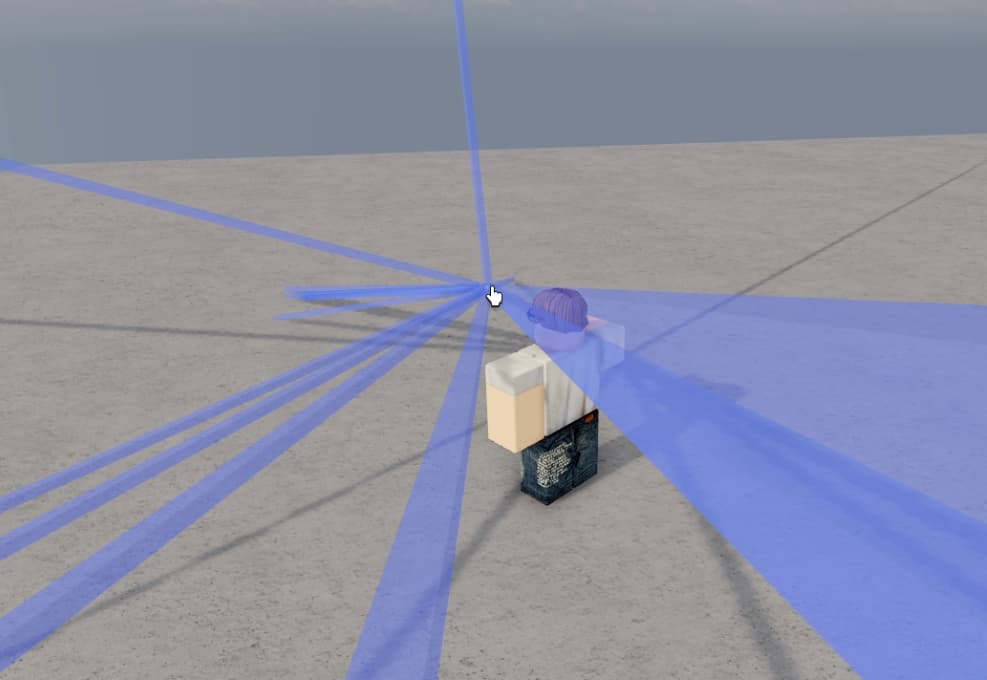


Roblox Studio Viewport Frame H Ng D N S D Ng T Nh N Ng V Ng D Ng . What Is CanQuery And What Does It Do Scripting Support Developer . What Is CanQuery And What Does It Do Scripting Support Developer . Changes To BasePart CanQuery Do Not Replicate Correctly In Team Create . Changes To BasePart CanQuery Do Not Replicate Correctly In Team Create
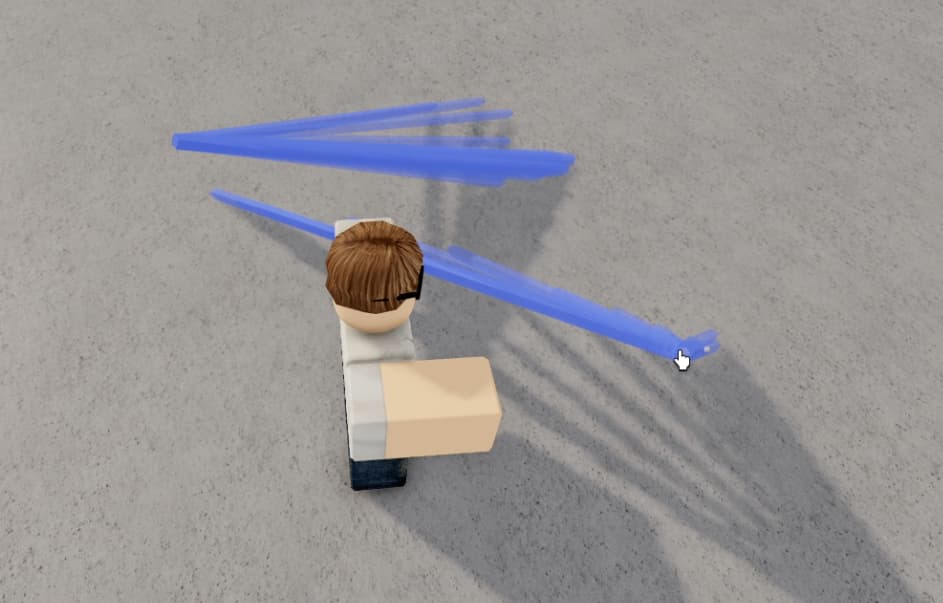


What Is CanQuery And What Does It Do Scripting Support Developer . Roblox 2026 Logo REVEALED New Color New Look YouTube Maxres2 . How To Add People Roblox Easily Your 2026 Guide . Roblox Me Command What Does It Actually Do NoFilter. Roblox R6 Explained What Does It Really Mean Oar2



How To Message On Roblox 2026 A Quick Guide . 2026 Chat Replica Creations Feedback Developer Forum Roblox 2 690x366 . Who Is Mgigi203 On Roblox And What Are They Doing In 2026 . What Is Haptic Roblox A Player S Guide 2026 Parental Guide For Roblox Usage UnicMinds . How To Publish A Game On Roblox In 2026 Roblox YouTube



ROBLOX IN 2026 YouTube Hqdefault . Roblox In 2026 YouTube . What Is Garhorse Roblox And Why Is It Popular In 2026 Updated Roblox. Who Is Evanca9 Roblox And What S Their Gaming Journey Roblox Appstore . What Is Hypergolic Roblox And How Does It Work 2026 Maxres2


Exploring Meaxico Roblox Fun What Awaits You In 2026 Oar2 . Roblox Annual 2026 327999 Roblox Annual Back . CanQuery Not Available For Parts Studio Bugs Developer Forum Roblox . What Is Hypergolic Roblox And How Does It Work 2026 1200x1769 . What Is Haptic Roblox A Player S Guide



Roblox R6 Explained What Does It Really Mean . Roblox At GDC 2026 Where To Find Us All Week Roblox. Roblox R6 Explained What Does It Really Mean Oar2 . Detect Part With CanQuerry Set To False Scripting Support Developer . What Does The Silver Monkey Do In Grow A Garden Roblox 2026 Roblox Plague Codes




Roblox 2026 YouTube Oar2 . Roblox 2026 YouTube Oar2 . How To Download Roblox On Any Device Easily In 2026 Roblox 1200x675 . When Did Roblox Come Out Answering Your Questions . What Is Bart Ender In Roblox And Why Does He Matter